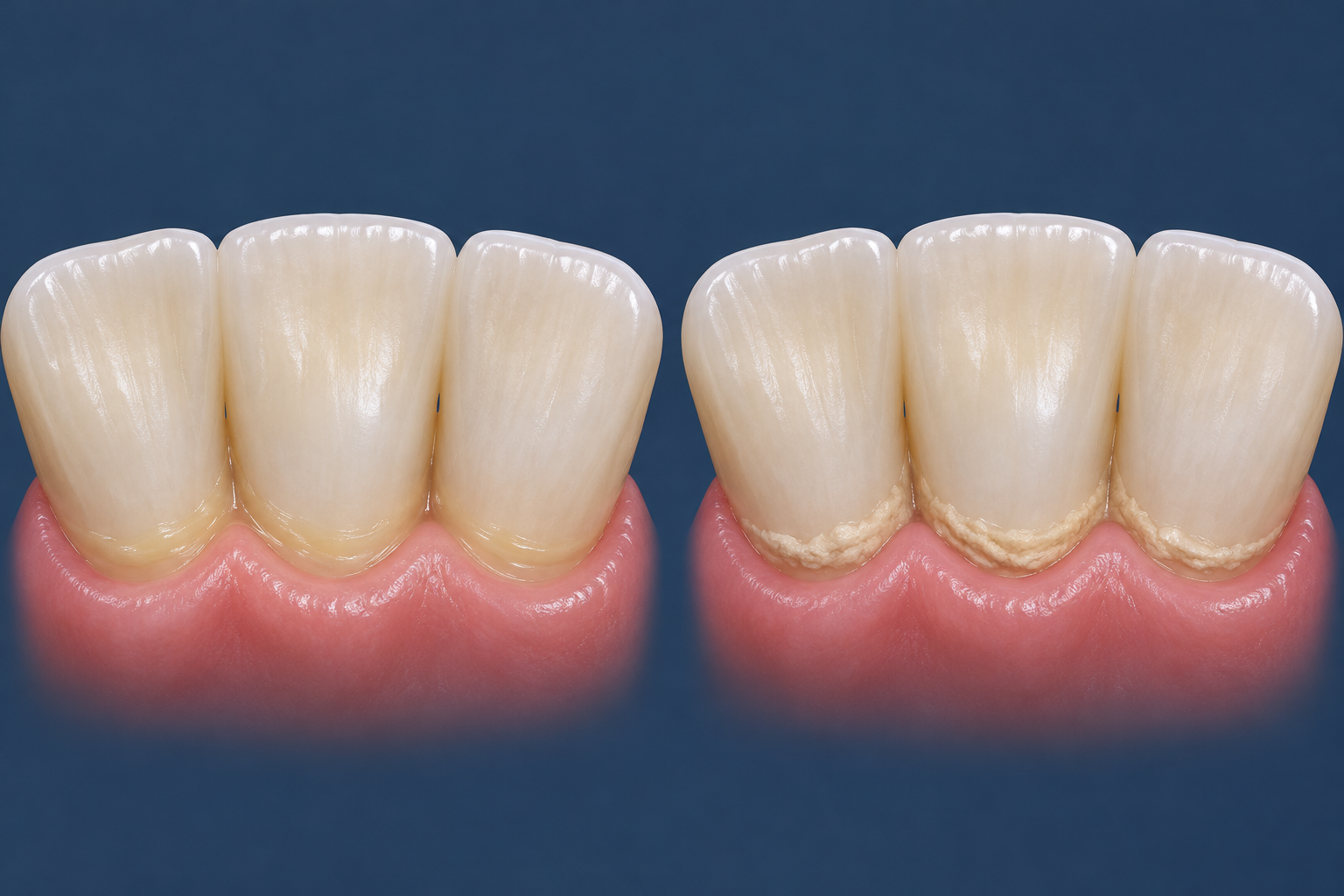
Tartar is plaque that has hardened on the teeth. Brushing can reduce soft plaque, but a toothbrush cannot remove tartar once it has hardened. It needs to be removed professionally at a dental clinic.
Plaque and Tartar Differ in More Than Name
Plaque is a sticky film of bacteria that forms on tooth surfaces. Brushing does more than remove bits of food: an important part of its job is to remove this film every day.
When minerals build up in plaque that remains on the teeth and it hardens, it becomes tartar. The soft film has turned into a hard deposit, so brushing alone can no longer remove it.
Can You Brush Harder or Scrape It Off Yourself?
There is no need to press your toothbrush harder because tartar remains. Brushing with too much force can injure the gums. Hardened tartar is removed professionally after a dental assessment.
Do not try to scrape it off with a sharp tool at home. Knocking off a visible deposit is different from removing tartar while assessing the health of the gums.
What Does Brushing at Home Do, Then?
Although it cannot remove existing tartar, brushing is essential for reducing new plaque buildup. That is why daily care is still needed after tartar has been removed.
Brush with fluoride toothpaste, and use floss or a suitable interdental cleaning tool where your toothbrush does not reach well. If an area is difficult to clean, point it out at your next dental visit and ask which tool to use and how.
Will Removing Tartar Make the Gums Completely Healthy?
If your gums frequently bleed or swell, their condition needs checking along with the tartar. The amount of visible tartar alone cannot determine what treatment is needed.
If gum disease has progressed, treatment below the gumline may be necessary. At your visit, ask, “Do I need gum treatment as well as tartar removal?” The basics of care are to reduce plaque at home and have a dental professional assess both hardened tartar and the condition of your gums.
References
Alongside the consultation questions in Tooth Notes, explore our clinic's information about related treatments.
Medical Information & Disclaimer
This article provides information to help you understand dental care in general and prepare for a consultation. It does not replace an individual diagnosis or treatment. Suitable treatment options, duration, outcomes, and side effects may vary depending on your oral and overall health. If you have symptoms or are deciding on treatment, please consult a dentist.
Related Information
Tooth Notes offers consultation preparation content run by Yonsei Goun Miso Dental Clinic, Sinchon Branch 1, which has provided care in Sinchon since 2003. For information about the clinic's dental care, visit the official website.
What to Bring to Your First Visit · Opening Hours & Directions
The image is an AI-generated 3D simulation to aid understanding. It is not an actual clinical record or CAD data for fabrication.