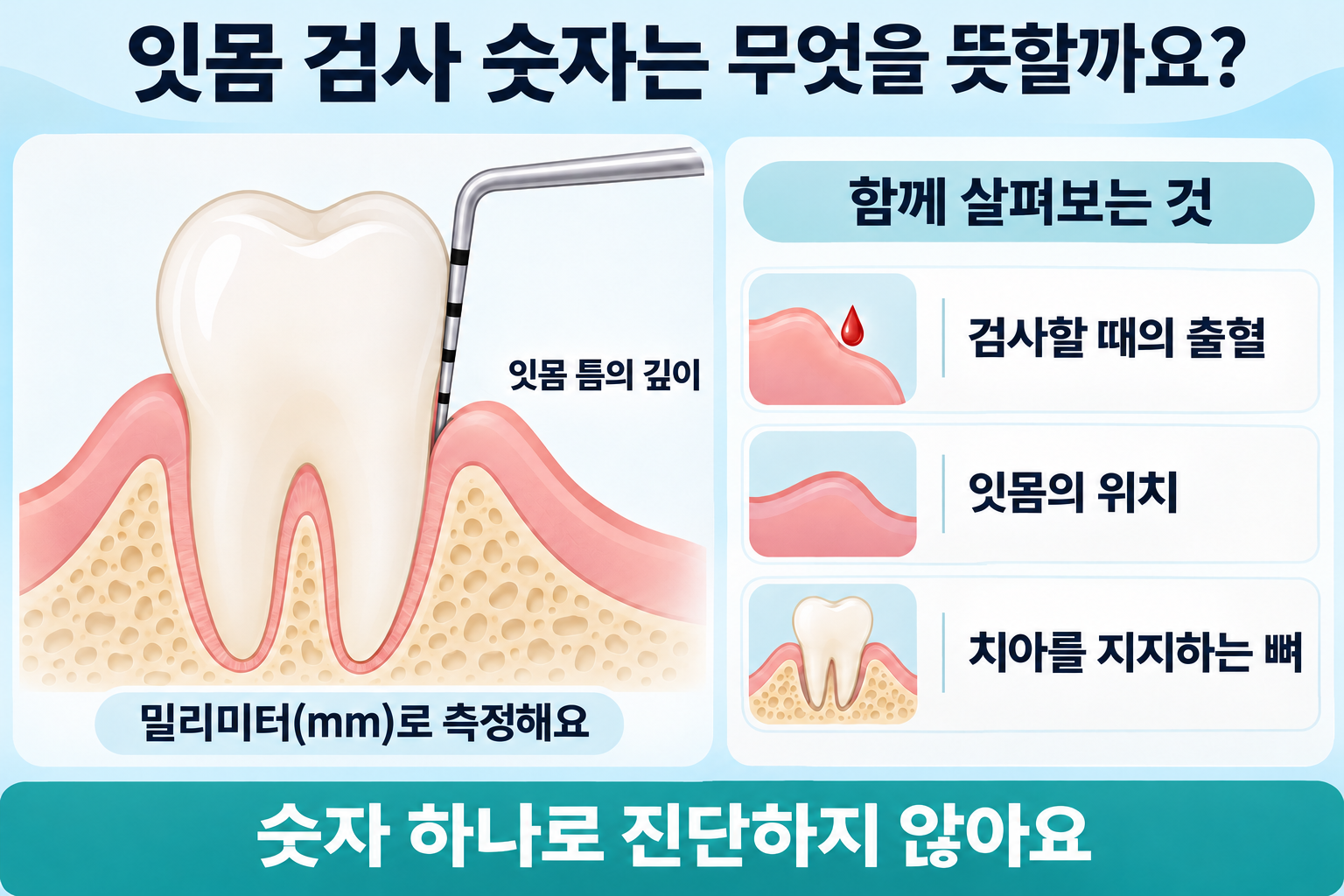
During a gum-depth examination, the numbers indicate the depth of the space between the tooth and gum in millimeters (mm). They are not a count of cavities or the amount of tooth to be removed. The depth is considered together with bleeding, gum recession, and other findings.
Does the examination make holes in the gums?
No. There is a narrow space where the tooth and gum meet. The dentist places a thin, marked instrument called a probe into this space to measure its depth. Think of it as using a small ruler to check just inside the gumline.
The instrument may feel like a poke as it goes alongside the tooth, but this examination does not grind the tooth or make a new hole. Its purpose is to measure from the gum edge to the bottom of the space. If it hurts or feels uncomfortable, let the dental team know rather than putting up with it.
Why is the same tooth measured several times?
Each tooth has surfaces facing the cheek, the tongue, and the neighboring teeth. Gum health can vary around a tooth, so measuring only one site may miss changes elsewhere. A detailed gum examination measures several sites around each tooth.
Hearing a series of numbers therefore does not mean that the same number of teeth have problems. The dentist may be recording different sites around a single tooth. Asking, “Which tooth and which side was that number for?” can help you understand the record.
Does a higher number automatically mean severe gum disease?
A deeper space can be a clue to gum disease, but a number alone is not a diagnosis. Swelling can change the position of the gum edge where measurement begins. When gums have receded, depth alone also cannot fully describe the condition of the tissues supporting the tooth.
The dentist therefore looks at bleeding and the amount of gum recession along with the depth. X-rays may be used to assess the bone around the teeth when needed. Do not conclude from the numbers alone that no treatment is needed, or that surgery or extraction is necessary.
Why measure again at the next visit?
Keeping a record helps compare changes at the same sites after treatment. However, a lower depth reading does not mean that all the lost supporting bone has grown back. Gum swelling and position also affect the measurement, so other findings are considered too.
You do not need to memorize every number. Ask about changes in your own mouth: “Has any area changed since last time?” or “Which area needs more attention?” Connecting the examination findings with your daily care can help you understand what to focus on next.
The gum-treatment guide from Yonsei Goun Miso Dental Clinic, Sinchon Branch 1, at 88 Sinchon-ro, Mapo-gu, also explains examinations and follow-up checks after treatment. During your consultation, ask which areas need care and why, along with what the numbers mean.
References
Alongside the consultation questions in Tooth Notes, explore our clinic's information about related treatments.
Medical Information & Disclaimer
This article provides information to help you understand dental care in general and prepare for a consultation. It does not replace an individual diagnosis or treatment. Suitable treatment options, duration, outcomes, and side effects may vary depending on your oral and overall health. If you have symptoms or are deciding on treatment, please consult a dentist.
Related Information
Tooth Notes offers consultation preparation content run by Yonsei Goun Miso Dental Clinic, Sinchon Branch 1, which has provided care in Sinchon since 2003. For information about the clinic's dental care, visit the official website.
What to Bring to Your First Visit · Opening Hours & Directions
The image is an AI-generated educational infographic. It does not show an actual patient photograph or treatment result.