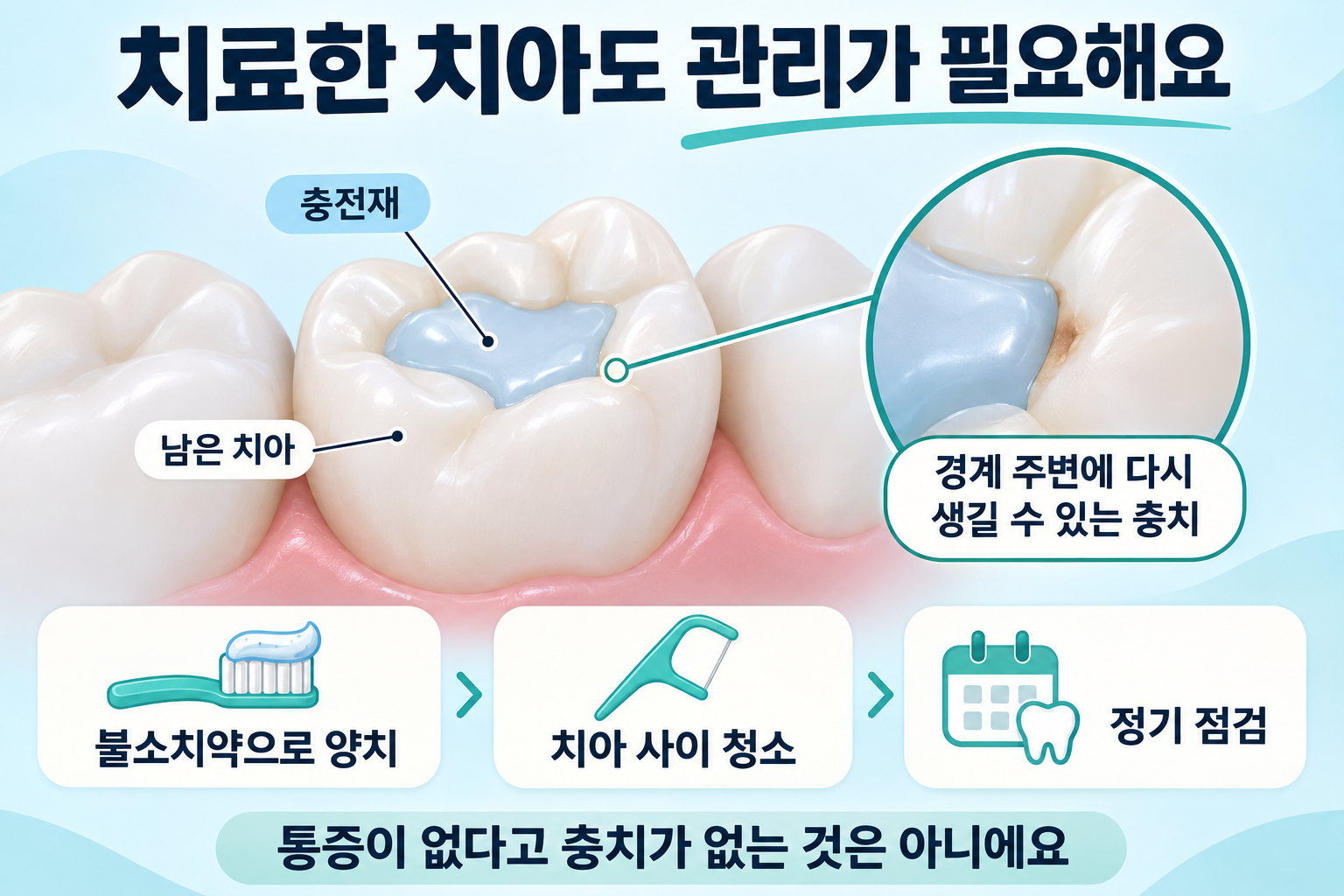
Yes, a treated tooth can develop another cavity. This does not mean the filling material itself decays. New decay can develop in the remaining tooth, including along the edge where it meets the filling. However, not every filling will necessarily develop a problem over time, and discomfort alone cannot establish that there is a cavity.
Why can decay develop after a filling?
Even after a damaged area is filled, your own tooth remains around it. Bacteria in plaque on the tooth surface use sugars from food to produce acids, which can damage the tooth’s hard surface. A tooth with a filling is not exempt from this process.
If a filling wears down or chips and a gap forms at its edge, plaque can collect there. But having had a filling does not by itself mean new decay is present. Along with when the filling was placed, the current condition of the tooth and filling needs to be considered.
Does no pain mean everything is fine?
Early tooth decay may cause no noticeable symptoms. Being able to chew comfortably for a while does not prove that there is no decay. Conversely, sensitivity to cold or discomfort when chewing does not automatically mean a new cavity has formed around a filling.
If you develop new sensitivity or pain, tell your dentist which side it is on and which foods bring it on. The dentist examines the tooth and may use X-rays when needed. A single sensation does not determine the cause or the treatment.
The everyday habits still matter after treatment
Continue brushing twice a day with fluoride toothpaste and cleaning between your teeth once a day with floss or an interdental brush. Instead of scrubbing only the treated tooth harder, gently clean all tooth surfaces and the spaces between them.
It is also worth considering how often you have sugary drinks or snacks. Sipping a sweet drink throughout class or work repeatedly exposes your teeth to sugar. Consider how often you eat and drink, as well as how much.
Checkups include areas that have already been treated
At a routine checkup, the dentist can examine existing fillings as well as teeth that hurt. If you know when a tooth was treated or which material was used, mention it. It is fine if you do not remember exactly. Start by describing any discomfort you have now.
Good care cannot guarantee that you will never get another cavity. But you do not need to keep worrying about a treated tooth either. A useful starting point is to continue brushing and cleaning between your teeth and have the treated areas checked at your routine visits.
References
Alongside the consultation questions in Tooth Notes, explore our clinic's information about related treatments.
Treated teeth need attention too
Tooth Notes is run by Yonsei Goun Miso Dental Clinic, Sinchon Branch 1, at 88 Sinchon-ro, Mapo-gu. If you are concerned about a previously treated tooth, start by telling us about any new or different sensations.
- Address
- 5F, Taeyoung Building, 88 Sinchon-ro, Mapo-gu, Seoul
- Dental Care Inquiries
- 02-3143-6321
Medical Information & Disclaimer
This article provides information to help you understand dental care in general and prepare for a consultation. It does not replace an individual diagnosis or treatment. Suitable treatment options, duration, outcomes, and side effects may vary depending on your oral and overall health. If you have symptoms or are deciding on treatment, please consult a dentist.
The image is an AI-generated educational infographic. It does not show an actual patient photograph or treatment result.