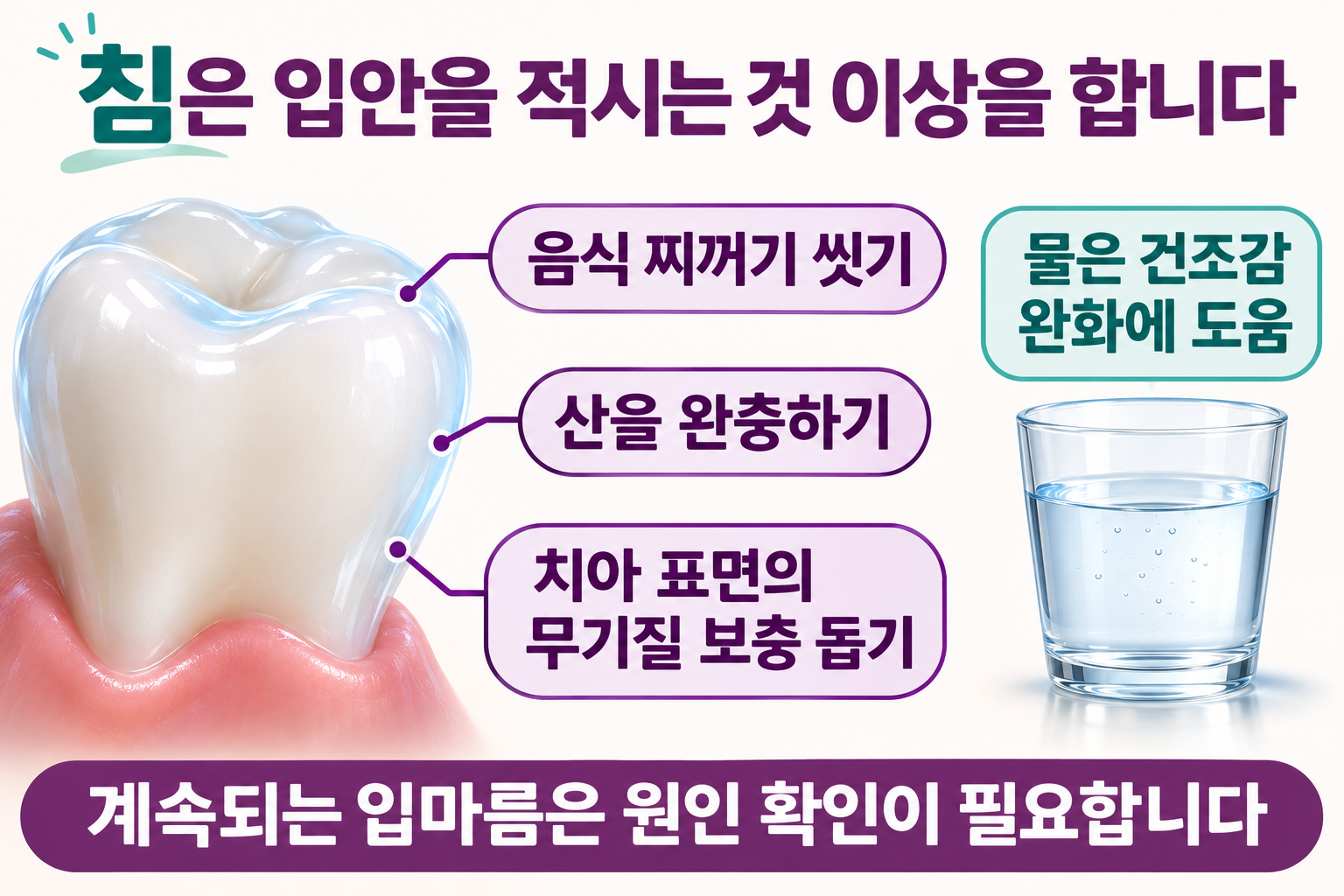
If reduced saliva flow continues, your risk of cavities may increase. Drinking water may bring temporary relief, but it cannot replace saliva's ability to wash the teeth and neutralize acids. However, how dry your mouth feels does not always match how much saliva you produce. Symptoms alone cannot establish the cause or confirm a problem with your salivary glands.
Are thirst and a dry mouth the same thing?
Thirst after sweating heavily during exercise or not drinking enough may be related to dehydration. A sticky mouth, a burning tongue, or discomfort when speaking or swallowing food also warrants attention to dry mouth symptoms. Both can occur together, so drinking frequently does not, by itself, tell you which is happening.
Dry mouth is the sensation that your mouth is dry. Tests may show reduced saliva production, but dryness can also be felt when saliva flow is within the normal range. Temporary relief after drinking water is useful to mention, but it does not confirm that your salivary glands are functioning normally. If you remain thirsty despite drinking enough and are also urinating frequently, tell your physician about both symptoms.
Why can too little saliva make teeth more vulnerable?
Saliva washes away food particles and neutralizes acids produced by bacteria in the mouth. It also contains calcium and phosphate, which help maintain the strength of tooth surfaces. When saliva is insufficient, these protective functions are reduced. Even for the same person, cavity risk can therefore change during periods of persistent dry mouth.
A sip of water can make a dry mouth feel more comfortable. However, moistening the mouth with water cannot fully replace saliva's components or its continuous flow. Frequently having sweet drinks or candy to relieve thirst also exposes your teeth to sugar more often. That is why it matters what you drink when your mouth feels dry.
Dryness does not mean that cavities will inevitably develop. A dental examination is needed to check for existing decay and changes around the gumline. It helps to consider relief from dryness and protection of the teeth as separate issues.
Review recent medication changes and habits during sleep
Antihistamines used for allergies, as well as some blood pressure medicines, antidepressants, and bladder control medicines, can cause dry mouth. Mentioning when a medicine was started or its dose changed, alongside when the dryness began, can help with assessing the cause. If you cannot remember the names, bring your prescription or medication packaging. Include any cold medicines bought without a prescription.
Even if you suspect a medicine is responsible, do not stop it or change when you take it on your own. Discuss any possible adjustment with the clinician who prescribed it so that necessary treatment can continue. Changing a medicine also cannot be guaranteed to resolve all dryness.
Your mouth may also feel dry when you breathe through it at night because of a blocked nose, when you are anxious, or when you are dehydrated. Persistent dryness can be associated with systemic conditions such as diabetes or Sjögren's disease, or with radiation treatment to the head and neck. Rather than diagnosing yourself from a disease name, share relevant details, such as whether your eyes are also dry or whether you are receiving other treatment.
Relieving dryness and preventing cavities need separate attention
Start by taking small sips of water throughout the day and reducing frequent sipping of sugary drinks. Chewing sugar-free gum can stimulate saliva flow, but it does not treat the cause of dryness. It is also worth reviewing smoking, alcohol use, and high caffeine intake.
Avoid frequently eating acidic foods, such as lemons, to stimulate saliva. Dry mouth gels and sprays are not equally suitable for everyone. People who still have natural teeth are advised to avoid acidic saliva substitutes, so ask a dentist or pharmacist about ingredients and directions when choosing a product. A mouth that feels more moist does not mean that cavity risk has disappeared.
Basic dental care includes gently brushing twice a day with fluoride toothpaste and cleaning between the teeth. If dryness persists, a dentist can assess your cavity risk and discuss whether additional fluoride is needed. Moisturizing the mouth and treating existing cavities are different tasks; one product should not be expected to do both.
Bring more information than how much water you drink
During an assessment, the clinician reviews your medications and health and examines the lining of your mouth, your teeth, and how saliva pools in the mouth. Further evaluation, such as measuring saliva flow or blood tests, may be considered when needed. Dry mouth alone does not mean that every test is necessary. Which tests are appropriate, and which healthcare professional should arrange them, depend on the history and examination.
Along with how many glasses of water you drink, consider noting the details below before your consultation. You do not need to complete every item or wait for a set period before making an appointment.
- When dryness began, and whether it is especially troublesome in the morning, at night, or throughout the day
- Difficulty speaking, eating, or swallowing; mouth pain; and changes in taste
- Prescription and over-the-counter medicines, recent dose changes, and treatment for other conditions
- Other changes, such as dry eyes, persistent thirst, or frequent urination
If eating or speaking is difficult, do not rely on self-care alone
Seek care if dryness makes eating or speaking difficult, or if your mouth becomes painful or red or develops white patches. Persistent dryness despite self-care or pharmacy products, or dryness that seems to have started after taking a prescribed medicine, also needs a discussion about the cause. If eating is difficult, there is no reason to endure it for several more weeks while only switching products.
A dentist can check for cavities, examine your mouth, and discuss oral care. If you also have dry eyes, persistent thirst, or frequent urination, a physician may need to assess your general health. Do not assume that a dental visit alone can identify every possible cause. Share the explanations and medication information from each consultation with the other clinicians involved.
Common Questions
Is a dry mouth inevitable as we get older?
Dry mouth should not simply be regarded as a normal part of aging. Conditions that develop with age and medications may contribute, so persistent discomfort needs an assessment of its cause.
References
- National Institute of Dental and Craniofacial Research (NIDCR) — Dry Mouth: Causes, Symptoms, and Evaluation ↗
- American Dental Association (ADA) — Saliva's Role and Dry Mouth ↗
- American Dental Association (ADA) — Evaluating Dry Mouth and Caring for Your Mouth ↗
- UK National Health Service (NHS) — Dry Mouth: Self-Care and When to Seek Care ↗
- UK National Health Service (NHS) — Distinguishing Persistent Thirst from Dry Mouth ↗
- Yonsei Goun Miso Dental Clinic, Sinchon Branch 1 — Cavity and Root Canal Treatment Guide ↗
Alongside the consultation questions in Tooth Notes, explore our clinic's information about related treatments.
If your mouth is dry and you are worried about your teeth
Tooth Notes is run by Yonsei Goun Miso Dental Clinic, Sinchon Branch 1, which provides information on cavity treatment, root canal treatment, and care to preserve natural teeth.
At your consultation, describe how the dryness has developed and mention any sensitive teeth or uncomfortable areas. You can refer to our cavity treatment guide, but an assessment by another healthcare professional may also be needed, depending on the cause of dryness.
- Address
- 5F, Taeyoung Building, 88 Sinchon-ro, Mapo-gu, Seoul
- Dental Care Inquiries
- 02-3143-6321
Medical Information & Disclaimer
This article provides information to help you understand dental care in general and prepare for a consultation. It does not replace an individual diagnosis or treatment. Suitable treatment options, duration, outcomes, and side effects may vary depending on your oral and overall health. If you have symptoms or are deciding on treatment, please consult a dentist.
The explanatory images in this article are AI-generated conceptual illustrations, not photographs of actual patients or treatment.